Date and Time
Location
Abstract
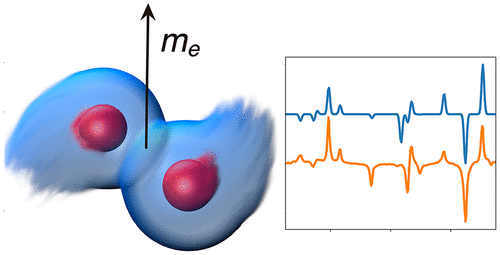
The Born-Oppenheimer approximation is the cornerstone of chemistry, the idea that electronic structure and molecular orbitals are defined relative to a stationary set of coordinates for the nuclei. This premise is based on the important differences in mass between electrons and nuclei, and the all important fact that nuclei move much slower than electrons and appear effectively frozen on the time scale of electronic fluctuations. Nevertheless, it is known that the Born-Oppenheimer approximation breaks down quite often, quite famously in the context of photochemistry and/or electron transfer. Much less well known is the fact that a classical BO theory does not conserve momentum (linear or angular) -- even when there is no obvious breakdown -- and BO theory cannot easily recover basic photonic observables, e.g. vibrational circular dichroism. In this talk, I will discuss this failure of the BO approximation, offer up phase space approximations as an improvement to restore conservation, and then suggest a new paradigm for understanding how nuclear entanglement with electronic degrees of freedom may well lead to chiral induced spin selectivity (an exciting phenomenon discovered in recent years) and other magnetic field effects that are and/or should be observable experimentally.
Bio
Joe Subotnik is the David B. Jones Professor of Chemistry at Princeton University. He graduated from Harvard (BA, physics) in 2000 and from Berkeley (PhD, biophysics) in 2007. He was a NSF postdoctoral fellow in Israel from 2007-2010, and was previously a Professor of Chemistry at the University of Pennsylvania (2010-2024). His research focuses on developing tools to describe energy conversion, the manner by which electrons, photons and nuclei exchange energy and angular momentum, especially in the condensed phase, merging fundamental chemical physics with practical computational methods. He has made fundamental contributions to the semiclassical surface hopping algorithm, the computation of electron-phonon couplings, the theory of electronic friction at metal surfaces, and the theory of vibrational circular dichroism.
Links
Poster