Approximately 1,700 scientists visit SSRL annually to conduct experiments in broad disciplines including life sciences, materials, environmental science, and accelerator physics. Science highlights featured here and in our monthly newsletter, Headlines, increase the visibility of user science as well as the important contribution of SSRL in facilitating basic and applied scientific research. Many of these scientific highlights have been included in reports to funding agencies and have been picked up by other media. Users are strongly encouraged to contact us when exciting results are about to be published. We can work with users and the SLAC Office of Communication to develop the story and to communicate user research findings to a much broader audience.
Science Highlight Archive Science Highlight Banner Images
Remediation of Uranium-contaminated Ground Water at Fry Canyon, Utah
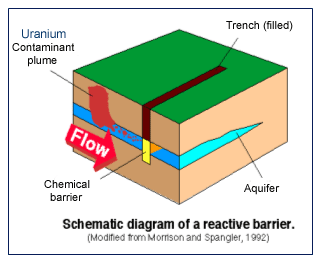
A new technology that acts like a giant underground filter is successfully beginning to clean up the uranium contaminating an aquifer in a remote Utah canyon.
Converting Methane to Methanol: Structural Insight into the Reaction Center of Particulate Methane Monooxygenase
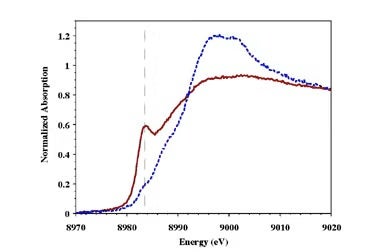
A team headed by Timothy Stemmler of Wayne State University's School of Medicine and Amy Rosenzweig at Northwestern University, has isolated a new form of a bacterial enzyme that efficiently convert
Synchrotron Mesodiffraction: A Tool for Understanding Turbine Engine Foreign Object Damage
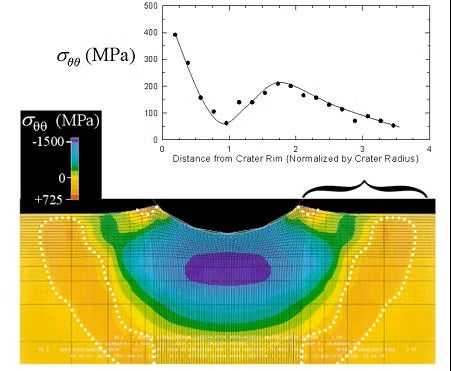
Aircraft turbine engines are prone to ingesting pebbles and other debris that can damage jet engine fan blades, dramatically reducing the longevity of the components - sometimes catastrophically.
X-ray Absorption Spectroscopy Catches the Chemical Form of Mercury in Fish
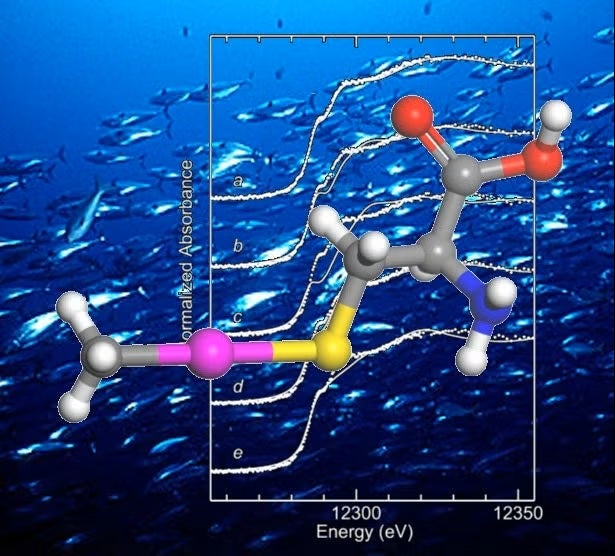
The presence of "methyl mercury" in fish is well-known, but until now the detailed chemical identity of the mercury has remained a mystery.
Crystal Structures of Mammalian Carboxylesterases and Their Function in Drug and Xenobiotic Metabolism
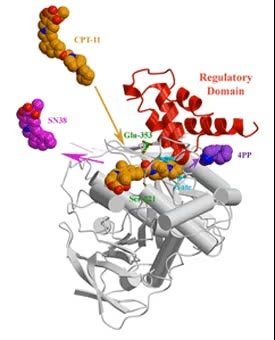
SSRL has played an important role in characterizing a family of enzymes that detoxify heroin and cocaine, and have the potential to metabolically eliminate the nerve poisons sarin, soman, and tabun, whi
Structural Genomics Identify Thymidylate Synthase Complementing Protein as a Novel Antibacterial Drug Target
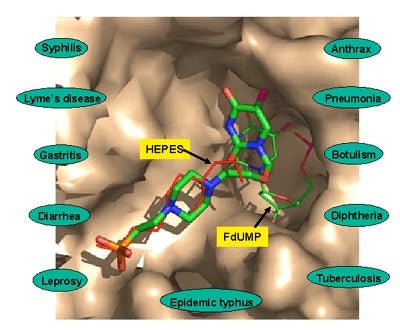
SSRL scientists have determined key binding sites in an enzyme family common to Anthrax, Botulism, Syphilis, Diarrhea and Lyme's disease.
A New Look at Biological Electron Transfer: Electronic Relaxation in Rubredoxins
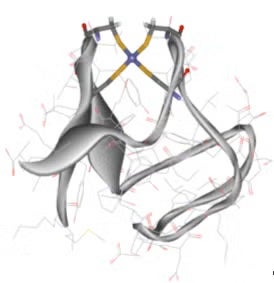
Electron transfer, the process of moving an electron from one place to another, is vital to almost all chemical systems.
Fate and Stability of Cr Following Reduction by Microbially Generated Fe(II)
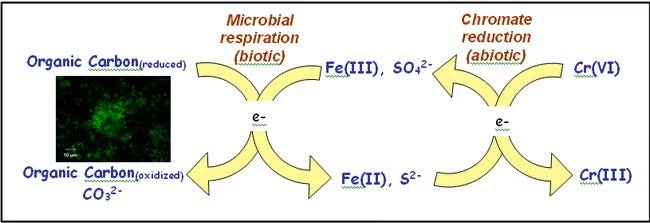
Industrial activities have led to widespread chromium (Cr) contamination in the environment.
Structure of the Specificity Domain of Bacterial RNase P
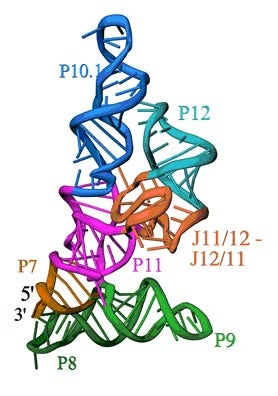
One of the primary ways people find structure and coherence in the world is to identify fundamental characteristics common within and between apparently different classes - plants, humans, atoms, sta
Exploring the Folding Landscape of a Structured RNA by SAXS
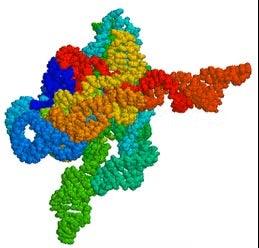
Determining how RNA (ribonucleic acid) folds, or "ravels", may offer a key to un-raveling how and why anomalies occur in the human genome.
Collaborate on Science Highlights
We can work with users and the SLAC Office of Communication to develop the story and to communicate user research findings to a much broader audience.