Approximately 1,700 scientists visit SSRL annually to conduct experiments in broad disciplines including life sciences, materials, environmental science, and accelerator physics. Science highlights featured here and in our monthly newsletter, Headlines, increase the visibility of user science as well as the important contribution of SSRL in facilitating basic and applied scientific research. Many of these scientific highlights have been included in reports to funding agencies and have been picked up by other media. Users are strongly encouraged to contact us when exciting results are about to be published. We can work with users and the SLAC Office of Communication to develop the story and to communicate user research findings to a much broader audience.
Science Highlight Archive Science Highlight Banner Images
Cytoplasmic Domain Structures of Kir2.1 and Kir3.1 Show Sites for Modulating Gating and Rectification
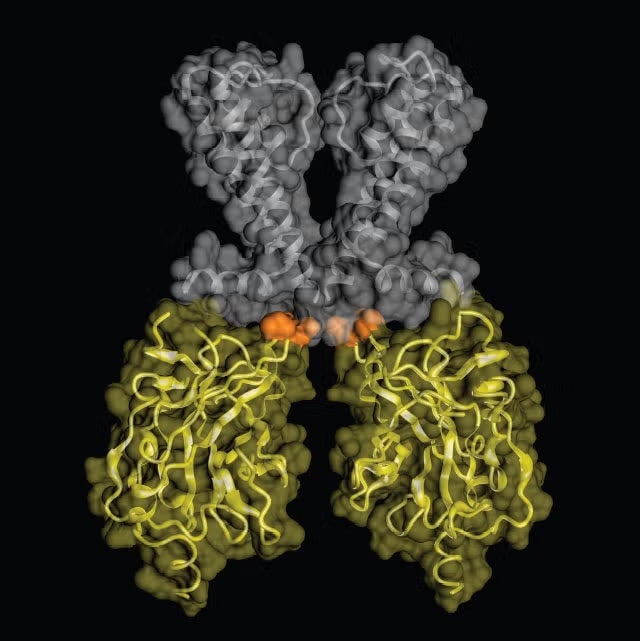
Ion channels in our cells generate the nerve impulses that enable the heart to beat, the body to move, and sensation and thought to occur.
Structural Basis for the Promiscuous Biosynthetic Prenylation of Aromatic Natural Products

Using x-ray diffraction data collected on Beam Line 9-2 at SSRL, and other beam lines at the ESRF and BNL, scientists at The Salk Institute for Biological Studies discovered the three-dimensional structure of
Characterization of a Genuine S=1/2 Fe(V) Complex
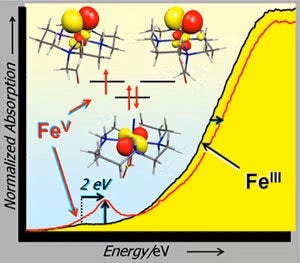
Iron metals oxidize to rust, losing electrons and gaining positive charge. Iron metals typically exist in an oxidation state of +2 or +3 (2 or 3 electrons less than a neutral iron atom).
Geological and Anthropogenic Factors Influencing Mercury Speciation in Mine Wastes
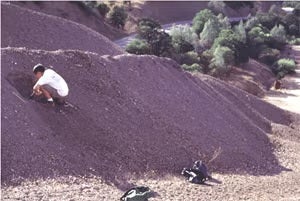
Mercury (Hg) is a naturally occurring element that poses considerable health risks to humans, with high exposure levels resulting in damage to the brain, heart, kidneys, lungs, and immune system.
X-rays Illuminate Ancient Archimedes Text

An early transcription of Archimedes' mathematical theories has been brought to light through the probing of high-intensity x-rays at SSRL's BL6-2.
The First Cadmium Enzyme - Carbonic Anhydrase 2 from the Marine Diatom Thalassiosira weissflogii
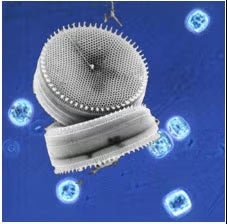
Cadmium is known to be extremely toxic to mammals, and is generally viewed alongside mercury as an environmental problem and toxic element that is not used by nature in any way.
Chemical Structure of Arsenic and Chromium in Chromated Copper Arsenate (CCA) Treated Wood
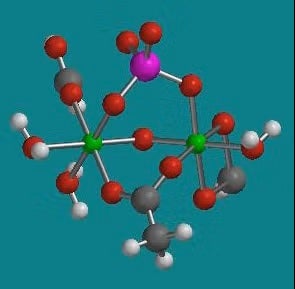
The chemically treated wood used for playgrounds, fences and decks appears to be less toxic than feared.
Ultrashort Flashes of X-rays and Electrons at SLAC
The Sub-Picosecond Pulse Source (SPPS) collaboration has published data from the first experiments ever using a linear accelerator-based femtosecond x-ray source. SPPS makes the world's shortest bunches of electrons in the SLAC linear accelerator and turns them into very bright pulses of x-ray light 1,000 times shorter than those made in synchrotron rings like SPEAR3.
From Mott Insulator to High-Tc Superconductor
High-temperature superconductors (HTSCs) operate in mysterious ways, but scientists are starting to understand their peculiarities by using a state-of-the-art spectroscopy system at SSRL. One of the biggest mysteries is how a material that starts as an insulator-which does not conduct electricity-can become a high-temperature superconductor after being doped with electric carriers.
Structure of the ESCRT-II Endosomal Trafficking Complex
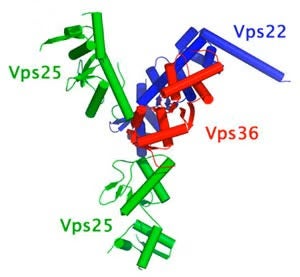
The lysosome is the "digestive system" of an animal cell. Molecules taken up from the outside are sent to the lysosome to be broken up into a form that can be safely used by the rest of the cell.
Collaborate on Science Highlights
We can work with users and the SLAC Office of Communication to develop the story and to communicate user research findings to a much broader audience.